Why a Family Desert Adventure in Dubai Beats the Beach
Dubai has a reputation for malls, beaches, and indoor theme parks, but ask any local parent and they will tell you the real magic happens when you leave the city behind. The Lahbab red dunes stretch for miles in silent, sculpted waves that shift with the wind. For families tired of queuing for water slides, a day spent on those dunes offers something different: shared adrenaline, a bit of grit, and memories that stick longer than sunblock.
The first time I took my own kids out to the desert, I was nervous. Would they be bored? Would the heat ruin everything? Within ten minutes of arriving, both children were running down a dune face, sand filling their shoes, laughing at nothing in particular. That is the thing about open space. It does not need a script. A family desert adventure does not require expensive gear or prior experience. It just requires the right attitude and a few practical choices.
Choosing Your Vehicle for the Dunes
The most common question from first-timers is what to drive. For a family with younger children, a dune buggy is often the best option. These machines are built for two people, so a parent can take the wheel while a child sits beside them. The roll cage and harness system provide a level of security that makes self-drive feasible even for cautious parents. Quad biking, on the other hand, is a solo ride. It suits older kids and teenagers who want to control their own machine. If you have a mix of ages, the best approach is to book a buggy tour for the adults and let the older kids follow on quads, all moving together as a group.
A licensed guide makes a real difference here. The desert is not a flat racetrack. The dunes have soft spots, steep slip faces, and sudden drops. A guide who knows the Lahbab red dunes will lead you along a route that keeps everyone safe while still delivering the thrills. They will also pace the group so that no one is left behind or pushed too hard. On our first trip, our guide stopped at the top of a high dune and let us watch the sun sink below the horizon. That moment, quiet and shared, was worth more than any fast run.
What to Expect on a Desert Safari with Kids
A full-day desert safari usually starts in the late afternoon, which is smart planning. The midday heat in Dubai is relentless, especially between June and September. By starting around 3 or 4 PM, you get the best light and cooler temperatures. The standard itinerary includes dune bashing, a short sandboarding session, and a stop at a desert camp for refreshments and a camel ride. For families, the balance between activity and downtime is important. Dune bashing in a 4x4 can be intense. Some children love the roller-coaster sensation. Others feel queasy after ten minutes. If you are unsure, try a self-drive buggy instead. You control the speed and can pull over whenever you need a break.

Sandboarding is simpler than it looks. You strap one foot onto a board and slide down a dune. The learning curve is short, and falls are soft. My youngest spent an hour climbing the same dune over and over just to slide down again. A camel ride is the opposite: slow, gentle, and slightly comical. It gives everyone a chance to catch their breath and take photos. These quieter moments are what make a family desert adventure feel complete. It is not all speed. There is space to talk, to notice the silence, and to watch the light change.
Safety and Gear: What You Actually Need
Rental companies in Dubai are well regulated, but you should still check a few things before you go. A helmet is non-negotiable for any self-drive vehicle. Goggles are equally important, because fine desert dust gets everywhere. Even on a calm day, a passing buggy can kick up a cloud that stings your eyes. Most reputable operators include both in the rental price, but confirm ahead of time. Sunscreen, long sleeves, and closed-toe shoes complete the kit. The sand gets hot enough to burn bare skin, especially mid-afternoon.
I have seen families show up in flip-flops and regret it within five minutes. Dress for dust and sun, not for style. A light scarf or shemagh helps keep sand out of your mouth during windy stretches. Bring water, more than you think you need. The desert dehydrates you faster than a beach because the air is dry and you do not notice how much you are sweating. A small cooler with fruit and sandwiches is welcome, though most desert camps provide dinner during sunset safaris.
The Best Time of Year for a Desert Adventure
From October through March, the weather is near perfect. Daytime temperatures sit in the mid-twenties Celsius. Evenings require a light jacket. Summer months are punishing, but not impossible if you stick to early morning or late afternoon slots. The Lahbab red dunes are striking year-round, but the winter light gives them a deeper colour. Photographs taken at golden hour look almost unreal, the sand glowing orange against a pale blue sky.

Weekends at the popular dunes get busy. If you can go on a weekday, you will have more space and a quieter experience. That matters when you are trying to keep track of children. Fewer vehicles mean less dust and more freedom to let kids explore on foot. A weekday trip also means you can often negotiate a better rate on buggy rental or a private safari.
Beyond the Buggy: Other Activities to Consider
Not every family member wants the same level of thrill. That is fine. A good desert camp offers variety. Traditional entertainment like henna painting, shisha, and Arabic coffee service gives non-drivers something to enjoy while others take one last run in the dunes. Some camps also offer short falconry displays, which fascinate children and adults alike. The key is to choose a tour that allows flexibility. You do not want to be locked into a rigid schedule when half your group wants to linger at the top of a dune and the other half wants to keep moving.
For families with very young children, a sunset safari that includes a camel ride and a simple dinner at camp is often the best fit. The pace is gentle. The experience introduces kids to the desert without overwhelming them. As children grow older and more confident, you can graduate to quad biking and longer self-drive tours. The desert adapts to the family, not the other way around.
What makes a family desert adventure work is not the equipment or the itinerary. It is the willingness to let go of the schedule and let the landscape set the pace. The dunes do not care about your plan. They offer what they offer. Some days that is a thrilling ride down a steep slope. Other days it is a quiet walk in the soft sand while the sun drops. Both are valuable. Both belong in a well-rounded desert experience.
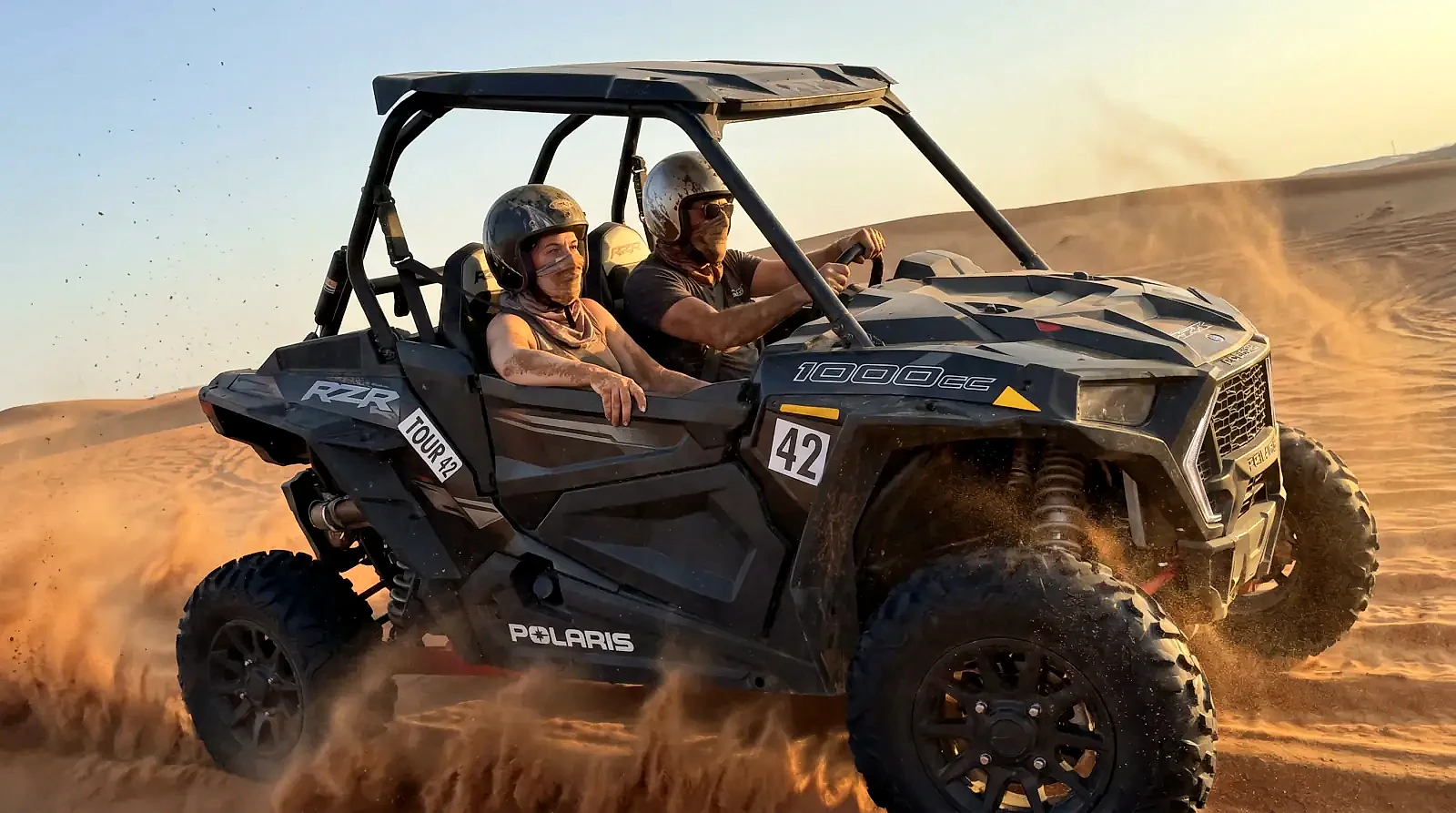
If you are visiting Dubai and want a break from the city, skip the water park for one day. Head out to the Lahbab red dunes, rent a buggy, put on a helmet and goggles, and let your kids see what real adventure looks like. It is dusty, it is loud, and it is absolutely worth it.